
No Minidoka 72-Hour Release Feed
The official Minidoka and Cassia channels do not publish a 72-hour released-inmate dataset. Cassia's law-enforcement page links a current Jail Roster and Recent Bookings, but no Releases category. Recent Bookings is not limited to three days. At research time, it extended across many months.
A true three-day release list would need the actual custody-end date and time, release type, and destination. Those fields do not appear in either public Mini-Cassia dataset. The booking pages instead show identity, booking, charge, agency, case, bond, and photograph data. They help identify the right person, not settle the outcome.
The official Cassia law-enforcement navigation shows which jail channels are actually offered.
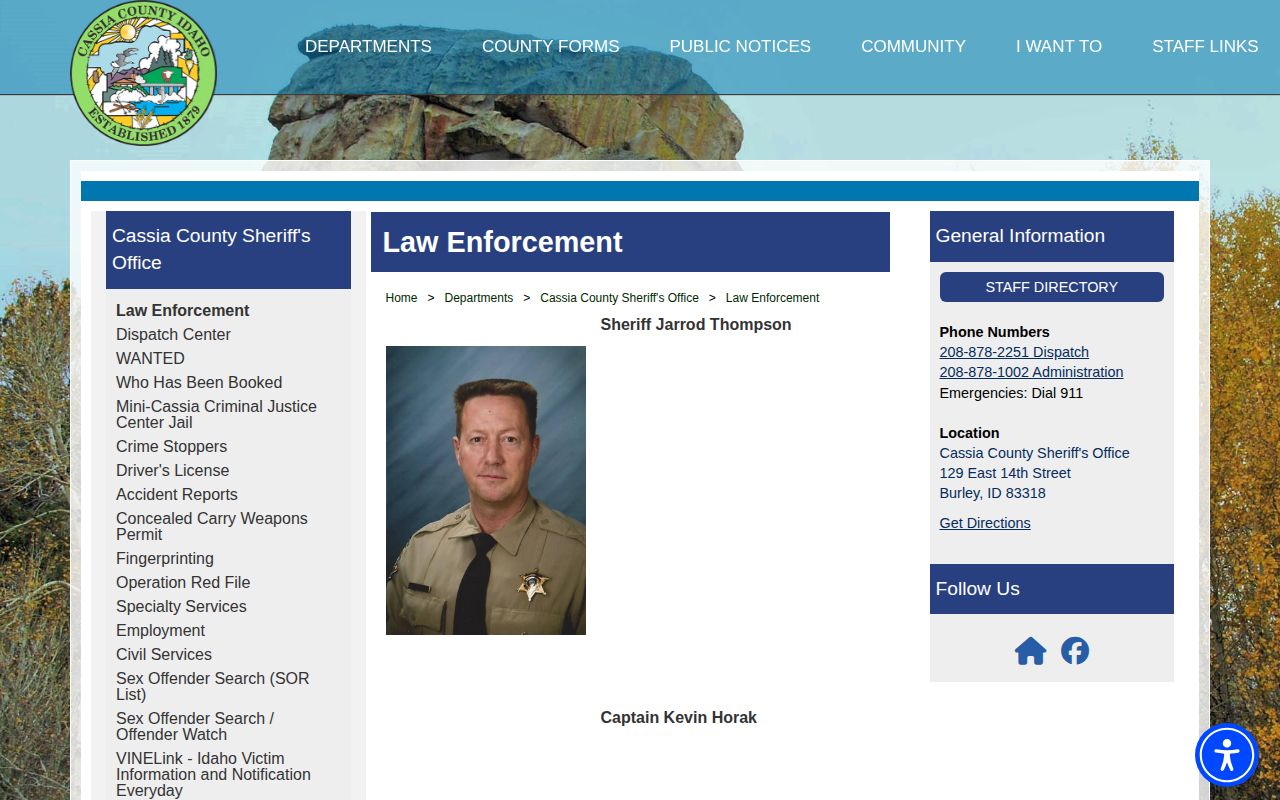
Roster, bookings, and warrants are separate tools. None should be relabeled as a rolling Minidoka County release list.
Check Minidoka Three-Day Releases
A three-day check should build a short event timeline. Start with the booking episode, then compare the latest jail, court, VINE, and receiving-agency evidence. Minidoka adults are housed at the Mini-Cassia Criminal Justice Center in Burley, although their criminal cases can remain Minidoka cases in Idaho's Fifth Judicial District.
- Search the current roster by name or booking number. Record the booking ID, booked time, agency, case number, and charge context.
- Search Recent Bookings for the same episode if the person is no longer on the live roster. Treat the result only as booking history.
- Call Mini-Cassia at 208-878-1000 and ask whether the booking ended during the three-day range, plus whether the exit was release or transfer.
- Review Minidoka iCourt for a signed order, disposition, bond event, judgment, or register entry that explains the legal basis.
- Check the correct receiving system if the center reports IDOC, ICE, U.S. Marshals, or another jail.
- Request the custody-release entry when the exact time, release code, or destination must be documented.
The Minidoka same-day release check is better for an event believed to have happened today. The three-day method is better for reconciling changes that crossed a weekend, holiday, or database update.
Minidoka Three-Day Record Fields
No public 72-hour feed supplies release fields, so each part of the answer comes from a source suited to that fact. A booking page anchors identity. The jail custody entry establishes physical departure. The court explains its order. A receiving system determines whether the person remained in custody elsewhere.
| Question | Best Minidoka-area source | Field or proof |
|---|---|---|
| Was this the right booking? | Roster or Recent Bookings | Booking ID, date, agency, case |
| When did the building custody end? | Mini-Cassia custody entry | Actual release date and time |
| Why did custody end? | Release entry and court record | Disposition, order, or code meaning |
| Did the person enter the community? | Mini-Cassia or receiving custodian | Community release versus transfer |
| Did state custody begin? | IDOC Resident/Client Search | In custody, In community, or discharge status |
| Was an alert sent? | Correct Idaho VINE feed | Release, movement, or status event |
Ask the records custodian for the booking sheet, custody-status/release entry, actual date and time, release disposition, destination or receiving authority if nonexempt, and booking photo. Provide a date range covering all three days so the request is tied to the intended window.
Minidoka Weekend Release Checks
No official local source publishes a special weekend or holiday release schedule. There is also no verified rule that moves Mini-Cassia release dates forward or backward around a closure. Do not estimate an exit from a court date or assume the regional center uses ordinary office hours for custody processing.
A three-day range is still useful because different records measure different moments. A judge can sign an order before jail staff complete warrants, holds, identity checks, property return, and transport. VINE may send a later event. IDOC may post a transfer after intake and its daily update. A release-record request may be routed on the next records-office day.
The range should be measured with exact timestamps when possible. A late-night jail departure and a next-morning database update can fall on different calendar dates without conflict. Likewise, a court filing date may identify when an order entered the record, not when staff received it or finished release processing. Record the time zone and source label instead of rounding all events to one day.
Build a timeline with labels: court order date, jail departure time, VINE event, IDOC update, and any Released to Supervision date. Differences among those points do not necessarily mean one source is wrong.
Note: Call Mini-Cassia before travel because no official page publishes a release door, waiting area, set time, or property procedure.
Minidoka Booking Data Retention
The official Recent Bookings page can preserve a booking after it stops being recent, but it publishes no 72-hour limit and no release-view retention promise. Long online display is not the same as a government retention schedule. The page remains a booking and photo source even after a roster change.
The official booking page demonstrates the available fields and its booking-centered purpose.
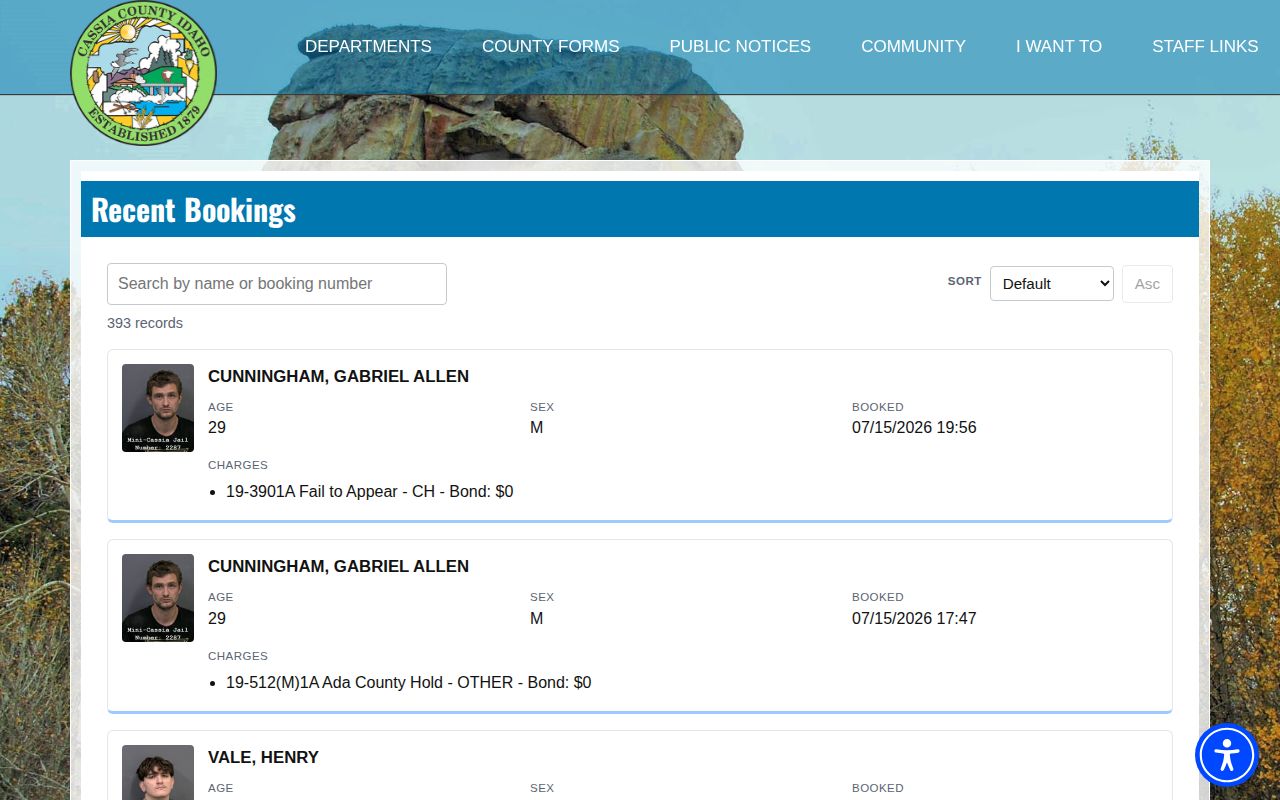
The page can help match the person to the correct booking, but days in jail and a continued photograph do not prove a three-day release.
Idaho county-record law classifies records as permanent, semipermanent, or temporary, subject to the county's schedule and other law. Without the classification for this jail series, no fixed retention term should be assigned. Ask the custodian which schedule applies.
The booking page's depth can still help with identity. Compare the booked date and time, case number, agency code, charge description, and booking photograph. A match across several fields is stronger than a name alone. Once the booking is fixed, carry its number into the release-record request so the custodian can locate the correct three-day event.
Reconcile Minidoka Release Systems
Three days may be enough for a person to move among systems. A Mini-Cassia roster disappearance followed by IDOC In custody supports transfer to state custody, not community release. An IDOC In community detail can establish parole or probation but should be matched to the Minidoka case and Released to Supervision field.
For an ICE path, ODLS can cover current detainees and some people released from ICE custody within its limited window, but missing results have several possible causes. U.S. Marshals prisoners can move between contract jails before BOP designation. The federal docket, housing jail, U.S. Marshals, and later BOP record must be read in sequence.
Idaho VINE is most useful when registration occurred before the event. County and IDOC feeds are separate, and a movement alert can mean transfer. The agency custody record remains the source for the exact date and reason.
A no-result must also be handled with care. It can reflect spelling, lag, feed scope, transfer, an older event, or a restricted record. Recheck the identifiers and call the last known custodian. Do not choose the source with the earliest date merely because it better fits an expected release.
Request Minidoka Release Records
The joint jail arrangement can split routing. Call Mini-Cassia first and ask which entity holds the custody-release series. Cassia operates the center and hosts the jail pages. Minidoka Sheriff Records can supply Minidoka arrest records and route county requests. If exact physical-release data is held by Cassia, use that custodian's request channel.
A narrow request should identify the person and booking episode, then ask for the actual release timestamp, disposition, community-release or transfer status, and receiving authority. If a code is used, ask for its public legend. Electronic delivery and an estimate can keep the request focused.
When state dates conflict, request separate IDOC fields for physical release, release to supervision, and sentence satisfaction. For the court basis, use Minidoka iCourt and request an accessible or certified order through the clerk when needed.
Minidoka Sheriff Records can route local arrest-record questions from its Rupert office, while the joint center or Cassia may hold the custody log. The Rupert building once contained the adult jail, but it is not today's adult release site. This local history matters when a person plans an in-person visit or asks which office can confirm a physical exit.
The full Minidoka County released-inmate search maps those channels for a named person. No result from one system should be treated as proof that no release or transfer occurred.
Note: A three-day date range helps the custodian locate the episode without turning the request into an unfocused demand.